
Backup and recovery are not the same thing
Having a backup does not tell you when your business will be running again. Restoring a server of several tens of terabytes from backup can take hours, sometimes days. For a production line, an e-commerce site or an ERP system, that may not be acceptable.
Disaster recovery is the answer to two questions: how long can this system be down at most (RTO)? How much data can be lost at most (RPO)? If the answers are minutes, you need more than backup.
Methods
Replication
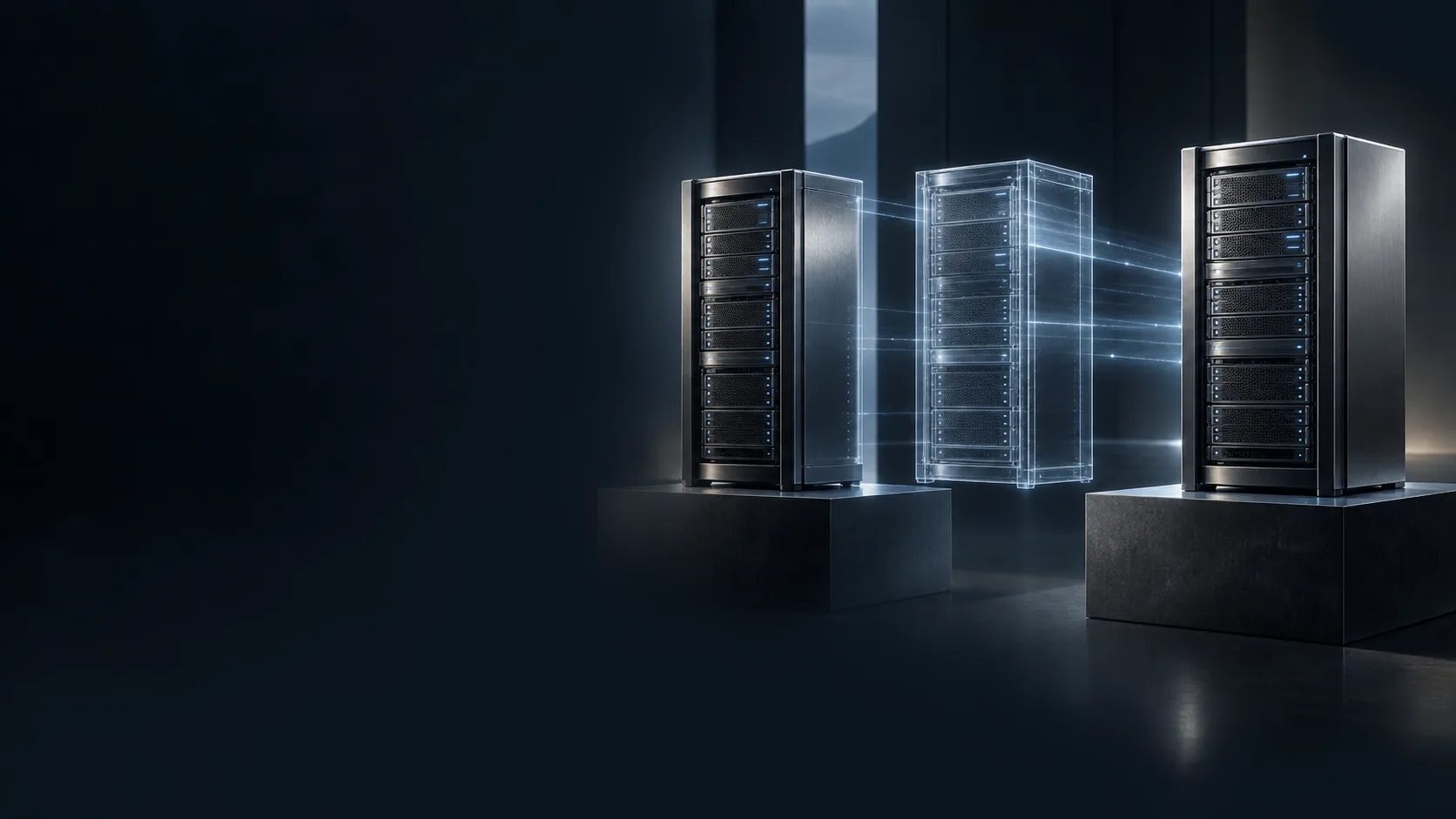
A critical server is continuously, or at very frequent intervals, copied to its replica at a second location. When the primary server fails, users are redirected to the replica and work continues within minutes.
Cloud failover (DRaaS)
Instead of building a second data centre, copies of critical systems are kept ready in the cloud. In a disaster, the systems are brought up in the cloud.
Rapid restore
Not every system needs replication. For less critical systems, recovery time is shortened with methods such as booting a virtual machine directly from the backup file.
Solutions we work with
- Carbonite (OpenText): Byte-level real-time replication and failover for physical, virtual and cloud servers with OpenText Availability (formerly Carbonite Availability); server migration with minimal downtime with OpenText Migrate (Carbonite Migrate).
- StorageCraft (Arcserve): Image-based backup for Windows and Linux systems with ShadowProtect, and fast system boot from the backup file. Backup chains are managed with ImageManager.
- Veeam: Virtual machine replication, instant recovery and automated backup testing.
Disaster recovery with Unna
- We listen first. We rank your systems by business impact and, together, set the target downtime and data loss for each.
- We plan together. We design which systems will be protected by replication and which by rapid restore, along with the standby site and connectivity. We balance cost against your targets.
- We install and document. We build the technical infrastructure and prepare a recovery plan setting out who does what, and in which order, in a disaster.
- We test and stay by your side. We test the plan at regular intervals without affecting live systems and share the results with you. An untested plan is not a plan.
Part of the whole
- Disaster recovery is built on backup: Veeam, Acronis and UnnaBulut.
- We use our data centre infrastructure as the standby site.
- With FortiGate, we set up secure connectivity and routing between the primary and standby sites.
Frequently asked questions
What are RTO and RPO?
RTO is the maximum length of time a system can be down, and RPO is the maximum amount of data loss that is acceptable.
Does every system need disaster recovery?
No. Usually only a small proportion of systems are truly critical. Reserving replication for these systems and protecting the rest with good backup keeps costs balanced.
Does disaster recovery testing affect the live system?
Not when it is set up correctly. Tests are carried out on an isolated network at the standby site; the live system keeps running.